Drugstore vs. Prescription Acne Products: When to Upgrade
Medically reviewed by Dr. Rachel Torres, MD, Pediatric Dermatologist
Written by Teen Acne Solutions Editorial Team — Updated April 16, 2026
Key takeaways
- Drugstore products work for most teens -- benzoyl peroxide, salicylic acid, and adapalene (Differin) can treat mild to moderate acne effectively when used consistently
- Give OTC products a full 8-12 weeks before deciding they aren't working -- switching too fast is one of the biggest mistakes teens make
- See a dermatologist if you have cystic acne, scarring, or no improvement after 3 months -- waiting too long can lead to permanent scarring
- Prescription options aren't always expensive -- generic tretinoin and antibiotics are often covered by insurance and cost less than premium drugstore brands
- Consistency beats product quality every time -- a simple routine you actually follow will outperform an expensive one you skip
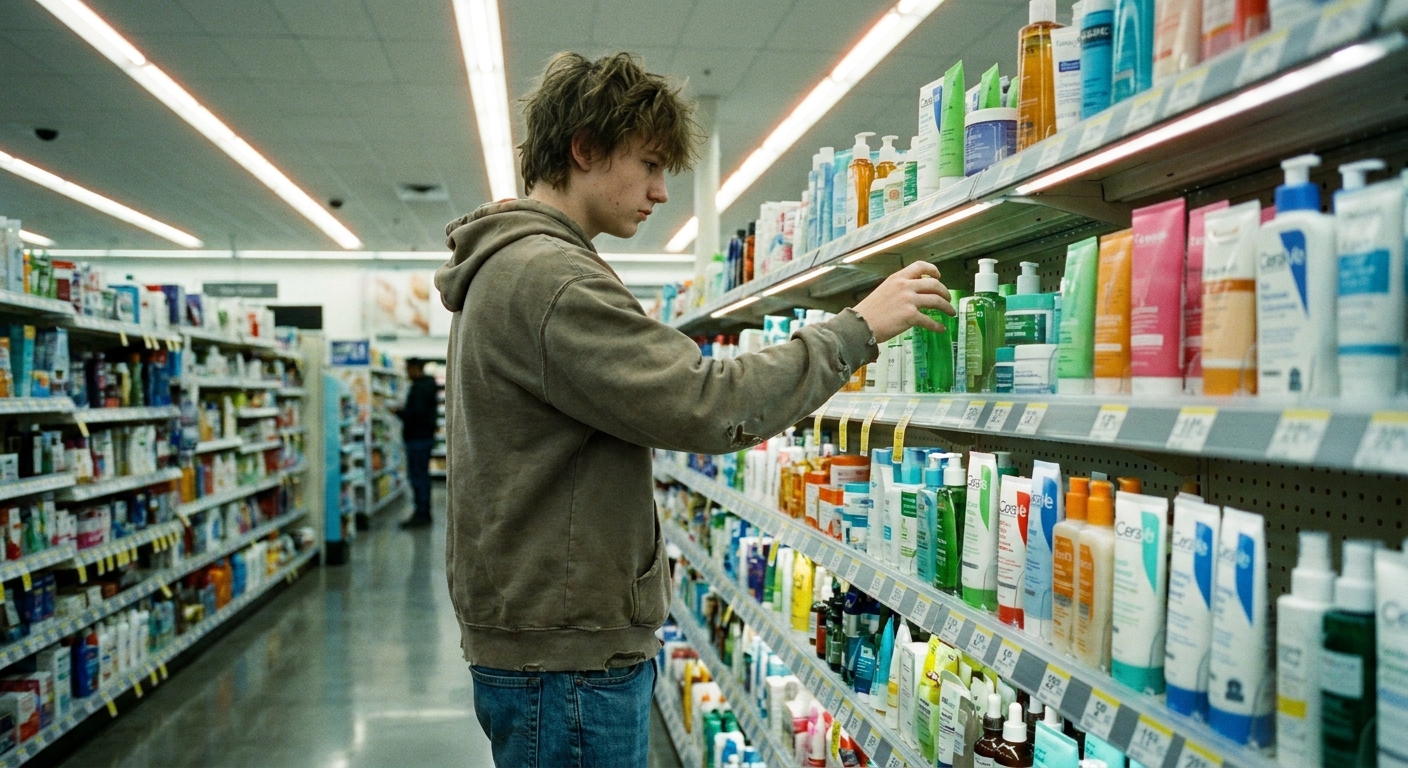
Your friend swears by that $40 cleanser from Sephora. TikTok says you need a seven-step routine. Your mom keeps telling you to "just wash your face." And somewhere in between all that noise, you're standing in the skincare aisle at CVS, staring at thirty different products, wondering if any of them actually work -- or if you need to beg your parents for a dermatologist appointment.
Here's what nobody tells you upfront: most teenagers can get their acne under control with products you can buy today, without a prescription, for under $15. But not all of them. And knowing the difference matters.
What Drugstore Products Can Actually Do
Over-the-counter acne products aren't watered-down versions of "real" treatments. Some of them use the exact same active ingredients dermatologists recommend -- just at lower concentrations. The American Academy of Dermatology actually recommends starting with OTC products for mild to moderate acne before considering prescriptions.
That's not a consolation prize. That's the standard of care.
The catch? You have to use the right ingredients, at the right strength, consistently. A $9 tube of benzoyl peroxide used every night for three months will outperform a $60 serum used twice a week when you remember it.
The Big Three OTC Ingredients
Not all drugstore acne products are created equal. Some are genuinely backed by decades of clinical research. Others are mostly water with nice packaging. Here's what actually works.
Benzoyl Peroxide
This is the workhorse. Benzoyl peroxide kills acne-causing bacteria (specifically Cutibacterium acnes) and helps clear out pores. It comes in concentrations from 2.5% to 10%, and here's something most people don't realize -- 2.5% works almost as well as 10% with significantly less irritation. A study in the Journal of the American Academy of Dermatology found no meaningful difference in efficacy between the two concentrations.
Start at 2.5% or 5%. Your skin will thank you.
Fair warning: it bleaches towels and pillowcases. Use white ones, or you'll learn this the hard way. I once ruined a brand-new navy pillowcase in a single night. That's not an exaggeration.
Salicylic Acid
If benzoyl peroxide is the bacteria killer, salicylic acid is the pore cleaner. It's a beta-hydroxy acid (BHA) that dissolves the gunk inside your pores -- dead skin cells, oil, the stuff that causes blackheads and whiteheads. You'll find it in concentrations of 0.5% to 2% in everything from cleansers to spot treatments.
Salicylic acid is better for:
- Blackheads and whiteheads (non-inflammatory acne)
- Oily skin that clogs easily
- People whose skin freaks out with benzoyl peroxide
It's gentler than benzoyl peroxide. But it also won't do much for deep, angry, inflamed pimples. Know what you're treating.
Adapalene (Differin)
This one changed the game when it went OTC in 2016. Adapalene is a retinoid -- the same class of ingredient as the prescription-only tretinoin. It speeds up skin cell turnover, prevents clogged pores, and reduces inflammation. Before 2016, you needed a prescription and it cost a lot more.
Now you can pick up a tube of Differin Gel 0.1% at any drugstore for around $13-15.
But adapalene requires patience. Serious patience. Your skin will probably get worse before it gets better -- that's called the "purge," and it typically lasts 2-6 weeks. Most teens quit right in the middle of the purge, thinking it's not working. Don't be that person. Clinical studies show it takes 8-12 weeks to see meaningful improvement.
When Drugstore Products Are Enough
For a lot of teens -- honestly, the majority -- OTC products handle the job if you give them a real shot. They're enough when:
Your acne is mild to moderate. That means blackheads, whiteheads, and some red pimples. Maybe you get a cluster on your forehead or along your jawline. It's annoying, but it's not leaving scars.
You haven't actually tried a consistent routine yet. And be honest with yourself here. Using a cleanser three times a week and a random spot treatment when you have a big event doesn't count. Consistent means every single day, morning and night, for at least three months.
Your breakouts are mostly surface-level. If you can see the pimple sitting near the surface of your skin -- a whitehead you could pop (don't), a blackhead on your nose -- that's the kind of acne OTC products handle well.
A 16-year-old I know spent a year bouncing between expensive products before finally sticking with a basic routine: gentle cleanser, adapalene at night, benzoyl peroxide in the morning, and moisturizer. Three months later, her skin was clearer than it had been in two years. The products weren't the problem. The consistency was.
Signs You Need a Dermatologist
But sometimes drugstore products genuinely aren't enough. Don't wait too long to upgrade. Here's when to push for that appointment:
Cystic acne. Those deep, painful bumps that sit under the skin for weeks and never really come to a head. They feel like marbles under your skin. OTC products can't reach deep enough to treat them effectively, and cystic acne is the type most likely to leave permanent scars.
Scarring is already happening. If your breakouts are leaving behind pitted marks or raised scars -- not just red or brown spots that fade (those are post-inflammatory marks, and they go away on their own) -- you need stronger treatment before the scarring gets worse.
Three months of consistent OTC use and nothing changed. This is the key threshold. Not three months of sort-of-trying. Three months of using the right active ingredients, every day, correctly. If you've done that and your skin looks the same? It's time.
Your acne is affecting your mental health. This one matters more than people admit. If breakouts are making you avoid social situations, skip school, or feel genuinely depressed, that's reason enough to see a dermatologist -- regardless of how "bad" your acne looks to anyone else.
What Prescriptions Bring to the Table
Prescription acne treatments aren't just "stronger versions" of what you buy at the drugstore. Some work through entirely different mechanisms.
Tretinoin (Retin-A)
The gold standard retinoid. Tretinoin is stronger than OTC adapalene and comes in higher concentrations (0.025% to 0.1%). It does essentially the same thing -- speeds up cell turnover, unclogs pores, reduces inflammation -- but more aggressively. Research shows it's particularly effective for both inflammatory acne and preventing new breakouts long-term.
The purge is real. The peeling is real. But so are the results.
Topical and Oral Antibiotics
Clindamycin (topical) and doxycycline (oral) are commonly prescribed alongside other treatments. They target the bacteria and inflammation driving your breakouts.
Important caveat: dermatologists almost never prescribe antibiotics alone anymore because of antibiotic resistance concerns. They're typically paired with benzoyl peroxide or a retinoid. And oral antibiotics are meant to be short-term -- usually 3-6 months -- not something you stay on indefinitely.
Spironolactone
This one's specifically for females. Spironolactone is actually a blood pressure medication, but at lower doses, it blocks androgens -- the hormones that trigger excess oil production. It's especially effective for hormonal acne along the jawline and chin. It typically takes 2-3 months to kick in.
Not an option for guys, though.
Isotretinoin (Accutane)
The nuclear option. And honestly? For severe, resistant acne, it works like nothing else. Isotretinoin fundamentally changes your skin's oil production. About 85% of patients see significant clearing after a single course (typically 4-6 months), and for many, the results are permanent.
But it comes with serious side effects and requirements. Monthly blood tests. A mandatory pregnancy prevention program (iPLEDGE) for anyone who could become pregnant. Dry skin, dry lips, dry eyes. Potential mood changes, though the research on the depression link is still debated.
It's not the first thing any good dermatologist will try. But for the right patient, it can be life-changing. That's not hyperbole.
The Cost Question
Let's talk money, because it matters -- especially when you're a teenager relying on your parents' willingness to pay.
Drugstore products: A full routine (cleanser, treatment, moisturizer, sunscreen) runs $25-50 total and lasts 2-3 months. Adapalene is the priciest piece at $13-15. Generic benzoyl peroxide wash is $5-8.
Dermatologist visit: $150-300 without insurance. With insurance, a copay is usually $20-50. Many insurers cover dermatology visits for acne, so check before assuming you can't afford it.
Prescription products: This is where it gets interesting. Generic tretinoin cream costs $15-30 with insurance or a GoodRx coupon. Generic doxycycline is often under $10. Generic spironolactone is $4-15 per month. Some of these are cheaper than the trendy drugstore serums influencers push.
Isotretinoin is the expensive one -- monthly monitoring and the drug itself can run $200-400/month even with insurance. But it's also typically a one-time treatment.
The honest math: a basic OTC routine is cheaper than a prescription one, but not by as much as you'd think. And if your OTC products aren't working, you're spending money on something that isn't helping. That's the most expensive option of all.
Building a Routine That Actually Works
Whether you go OTC or prescription, the framework is the same.
Morning:
- Gentle cleanser (CeraVe, Vanicream, La Roche-Posay -- pick one, they're all fine)
- Treatment (benzoyl peroxide if using, or nothing)
- Moisturizer (yes, even if your skin is oily)
- Sunscreen (SPF 30+, especially if using any retinoid)
Night:
- Same gentle cleanser
- Treatment (adapalene/tretinoin -- retinoids go on at night)
- Moisturizer
That's it. No ten-step routine. No essences, toners, or serums you saw on TikTok. When you're treating acne, fewer products means fewer chances to irritate your skin.
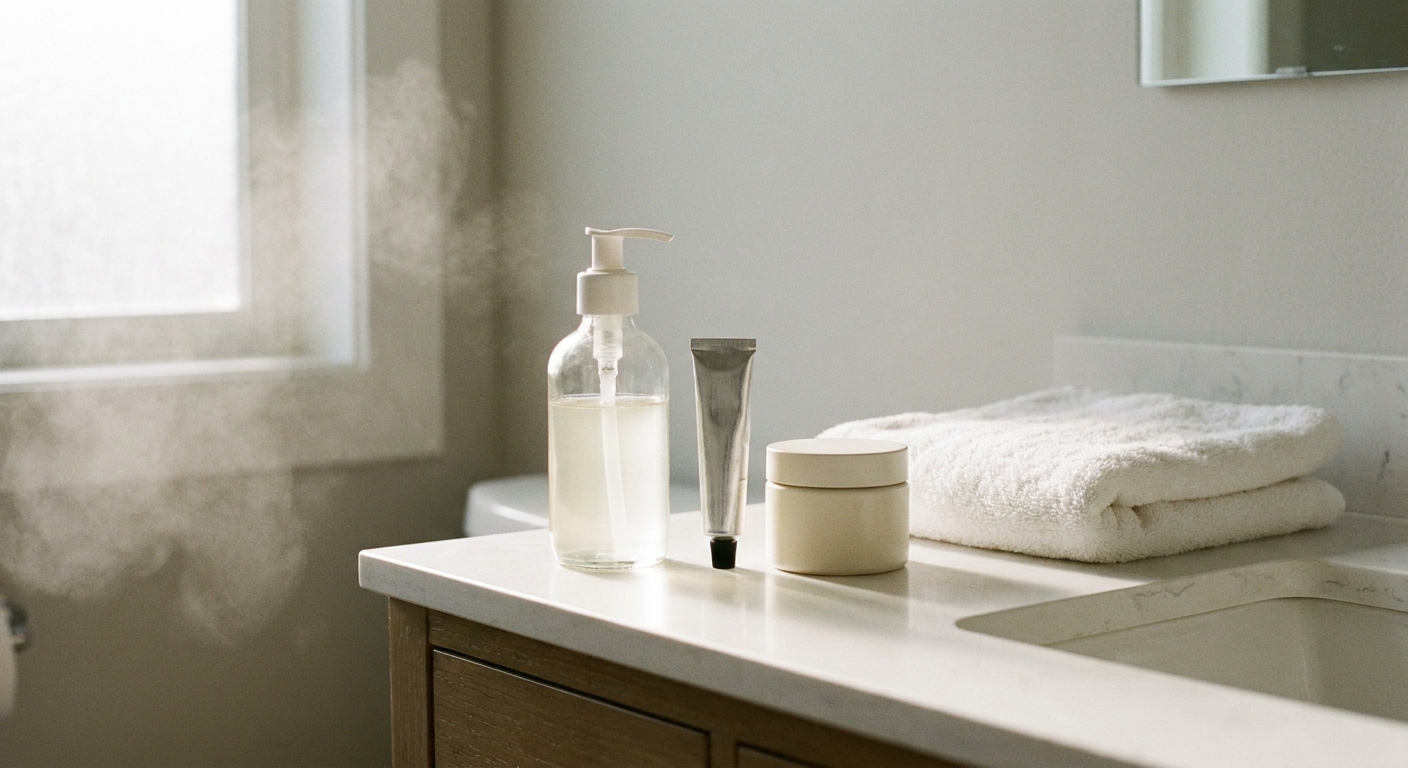
One more thing nobody mentions enough: give each product time before adding another. Start with just a cleanser and moisturizer for a week. Then add your active treatment. If you start everything at once and your skin reacts badly, you won't know which product caused it.
Bottom Line
Most teens can clear their acne with drugstore products -- specifically benzoyl peroxide, salicylic acid, or adapalene -- if they use them correctly and stick with them for at least three months. If you've done that and your skin isn't improving, or if you're dealing with deep cystic breakouts and scarring, get to a dermatologist. There's no prize for toughing it out, and the longer severe acne goes untreated, the harder the scarring is to fix.
How we reviewed this article:
Our experts continually monitor the health and wellness space, and we update our articles when new information becomes available.
- Adapalene 0.1% gel has efficacy and safety comparable to tretinoin 0.025% gel in the treatment of acne vulgarishttps://pubmed.ncbi.nlm.nih.gov/11843235/
- Benzoyl peroxide: a review of its current use in the treatment of acne vulgarishttps://pubmed.ncbi.nlm.nih.gov/31452372/
- A review of the use of salicylic acid in dermatologyhttps://pubmed.ncbi.nlm.nih.gov/25607907/
- American Academy of Dermatology Guidelines of Care for the Management of Acne Vulgarishttps://www.jaad.org/article/S0190-9622(16)00017-0/fulltext
- Tretinoin: A Review of Its Anti-Inflammatory Properties in the Treatment of Acnehttps://pubmed.ncbi.nlm.nih.gov/31141214/
- Oral Isotretinoin for Acne - A Reviewhttps://pubmed.ncbi.nlm.nih.gov/28141067/
- Antibiotic resistance in acne treatment: Current status and future perspectiveshttps://pubmed.ncbi.nlm.nih.gov/31141058/
- Spironolactone in Dermatology: Uses and Safetyhttps://pubmed.ncbi.nlm.nih.gov/31452371/
Read This Next

At-Home Dermatology Tools: Gua Sha, Jade Rollers, and Acne Devices
Most at-home skin tools are luxury items, not acne treatments. Here's an honest look at what works, what's harmless, and what can actually make things worse.
Read More →
Vitamin C Serum and Acne: Brightening Without Breaking Out

Ceramides and Acne: Why Your Skin Barrier Is the Foundation

Probiotics for Acne: What the Science Actually Says (So Far)
The gut-skin axis is real and the early research on probiotics for acne is interesting. But 'interesting' and 'worth spending $30/month on' aren't the same thing. Here's what we know and what we don't.
Read More →
Hormonal IUDs and Acne: Why Some Birth Control Makes Skin Worse
Levonorgestrel IUDs like Mirena and Kyleena can trigger or worsen acne because of their androgenic progestin. Here's why it happens, what to do about it, and how other birth control options compare.
Read More →