Best Sunscreen for Teens with Acne: Won't Clog Pores or Leave a White Cast
Medically reviewed by Dr. Rachel Torres, MD, Pediatric Dermatologist
Written by Teen Acne Solutions Editorial Team — Updated April 14, 2026
Key takeaways
- Acne treatments like retinoids and benzoyl peroxide make your skin burn faster -- skipping sunscreen while using them can cause dark marks that last months longer than the pimple itself
- Mineral sunscreens are gentler but often leave white cast -- look for tinted or micronized zinc formulas if you have a medium-to-dark skin tone
- The best sunscreen is the one you'll actually wear -- a cosmetically elegant SPF 30 you use daily beats an SPF 50 that sits in your drawer
- Look for "non-comedogenic" and "oil-free" on the label -- but patch test anyway, because some formulas still break people out despite the labeling
That red pimple on your chin finally faded. But now there's a brown spot where it used to be -- and it's been there for three months. You thought the pimple was the hard part. Turns out the mark it left behind is worse.
Here's what probably happened: you treated the acne (good), but you skipped sunscreen (bad). UV light hit that healing skin and turned temporary redness into a stubborn dark mark that just sits there, staring back at you in every mirror. And if you're using retinoids or benzoyl peroxide -- two of the most effective acne treatments out there -- your skin was even more vulnerable than usual.
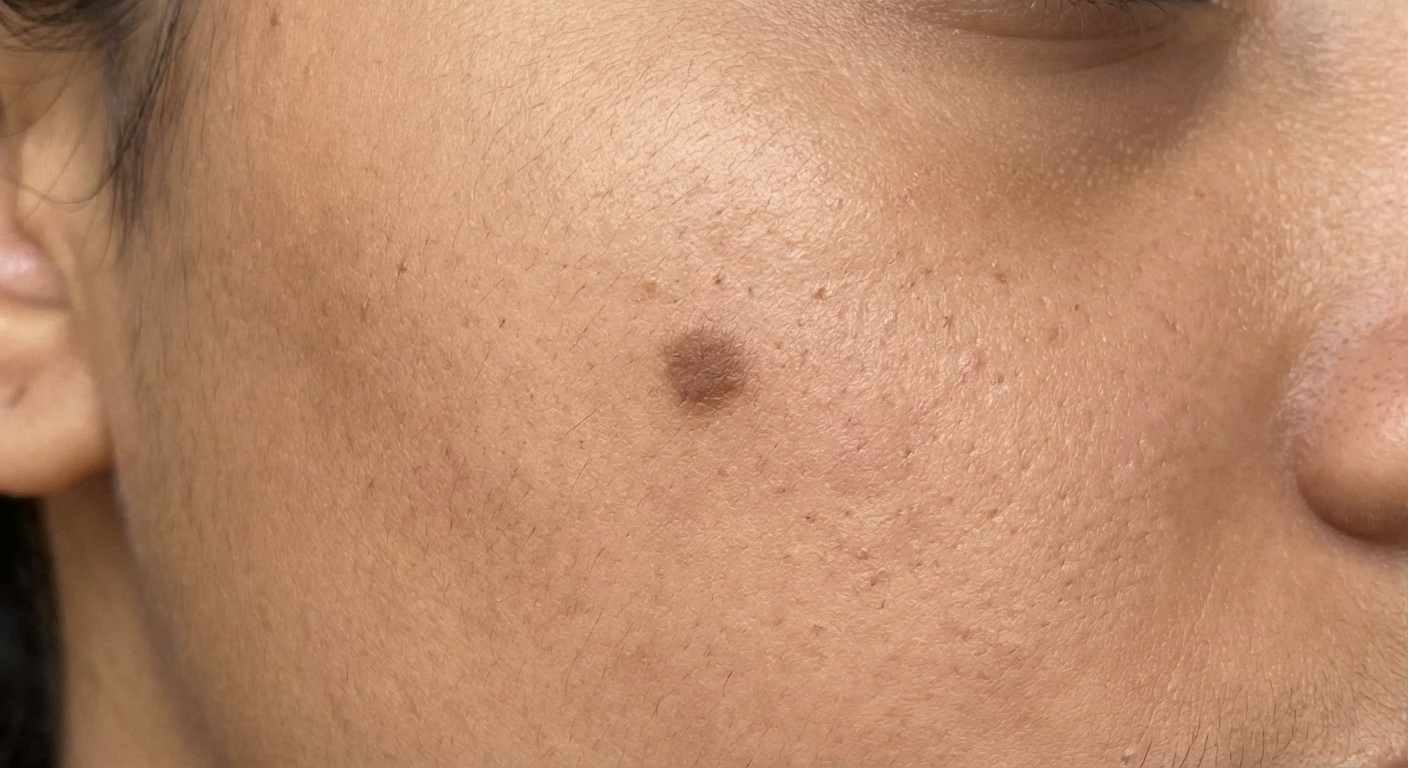
So yeah. Sunscreen isn't optional when you're fighting acne. But finding one that doesn't cause new breakouts? That's the actual challenge.
Why Your Acne Treatment Is Making You Sun-Sensitive
Nobody tells you this when they hand you the Differin prescription, but most acne treatments basically strip away your skin's built-in sun defense. Not on purpose -- it's just a side effect of how they work. And it matters way more than most people realize.
Retinoids (tretinoin, adapalene/Differin, retinol) thin the outer layer of your skin and speed up cell turnover. That fresh skin underneath? It burns ridiculously fast. Studies have found that retinoid users get significantly more UV-induced redness compared to people not using them. You can go from "fine" to "visibly sunburned" in the time it takes to walk across a parking lot. No exaggeration.
Benzoyl peroxide surprises people. BP generates free radicals to kill acne bacteria, but those same free radicals make your skin more reactive to UV light. It's not as intense as retinoid photosensitivity, but it's real -- and almost nobody warns you about it.
AHAs and BHAs (glycolic acid, salicylic acid) are chemical exfoliants that remove dead skin cells. Less dead skin means less natural UV protection. The FDA actually requires photosensitivity warnings on products containing certain AHAs. That should tell you something.
But here's the part that matters most for teens: post-inflammatory hyperpigmentation (PIH). When a pimple heals, the skin is inflamed. Hit that healing skin with UV and it triggers excess melanin production, leaving behind dark spots that can stick around for 6-12 months. In darker skin tones, PIH is often more distressing than the acne itself. That matters.
Sunscreen doesn't just prevent sunburn. It prevents your acne scars from getting worse. Full stop.
Chemical vs. Mineral: Which Type Won't Break You Out?
Two categories. Different mechanisms. Different trade-offs. Let me actually help you decide instead of just listing ingredients.
Chemical sunscreens absorb UV rays and convert them to heat. The active ingredients -- avobenzone, homosalate, octisalate, oxybenzone -- tend to be lightweight, invisible on skin, and easy to layer under makeup. The downside? Some chemical filters, particularly oxybenzone, can irritate sensitive or acne-prone skin. And that heat conversion? For some people, the warmth triggers flushing or kicks oil production into overdrive.
Mineral sunscreens (also called physical) sit on top of your skin and deflect UV rays. The active ingredients are zinc oxide and titanium dioxide. Here's why dermatologists push these for acne skin: zinc oxide is actually anti-inflammatory. It calms redness while protecting from the sun. That's doing two jobs at once.
The catch is obvious to anyone who's tried one: the white cast. We'll get to that.
My gut-level recommendation? Start with mineral if you can find one that looks decent on your skin tone. Zinc oxide is the gold standard for sensitive, breakout-prone skin. No argument. But -- and this is important -- a mineral sunscreen you won't wear because it looks terrible is worse than a chemical sunscreen you actually put on every morning. The dermatology world has come around to this too. Compliance beats ingredient purity every single time.
The White Cast Problem (And Why It Matters)
Let's be real. Traditional mineral sunscreens leave a visible white or grayish film on the skin. On fair skin, it's annoying. On medium skin, it's noticeable. On dark skin, it's a dealbreaker.
If you're a Black teen and every sunscreen makes you look ashy, you're not picky -- the industry failed you.
This isn't a cosmetic nitpick. It's an equity issue. Studies show that people with darker skin tones are less likely to use sunscreen regularly, and the white cast problem is one of the documented reasons why. Meanwhile, PIH from acne disproportionately affects skin of color. So the people who need sunscreen the most are being handed products that look terrible on them. Think about that for a second.

The good news: formulation science has gotten dramatically better. Micronized zinc oxide particles are smaller and scatter less visible light, reducing (though not always eliminating) white cast. Tinted mineral sunscreens use iron oxides to match skin tones. And some newer products blend chemical and mineral filters for protection without the chalkiness.
If you have a darker skin tone, don't just look for "mineral" or "non-comedogenic." Look for tinted, sheer, or invisible on the label. Or go with a well-formulated chemical sunscreen -- the slight irritation risk is worth it if the alternative is wearing no sunscreen at all.
The 6 Sunscreens Worth Trying
I'm going to be opinionated here. There are hundreds of sunscreens on the market. These six actually make sense for teens dealing with acne, and I've sorted them by what matters most: will you actually put this on your face every day?
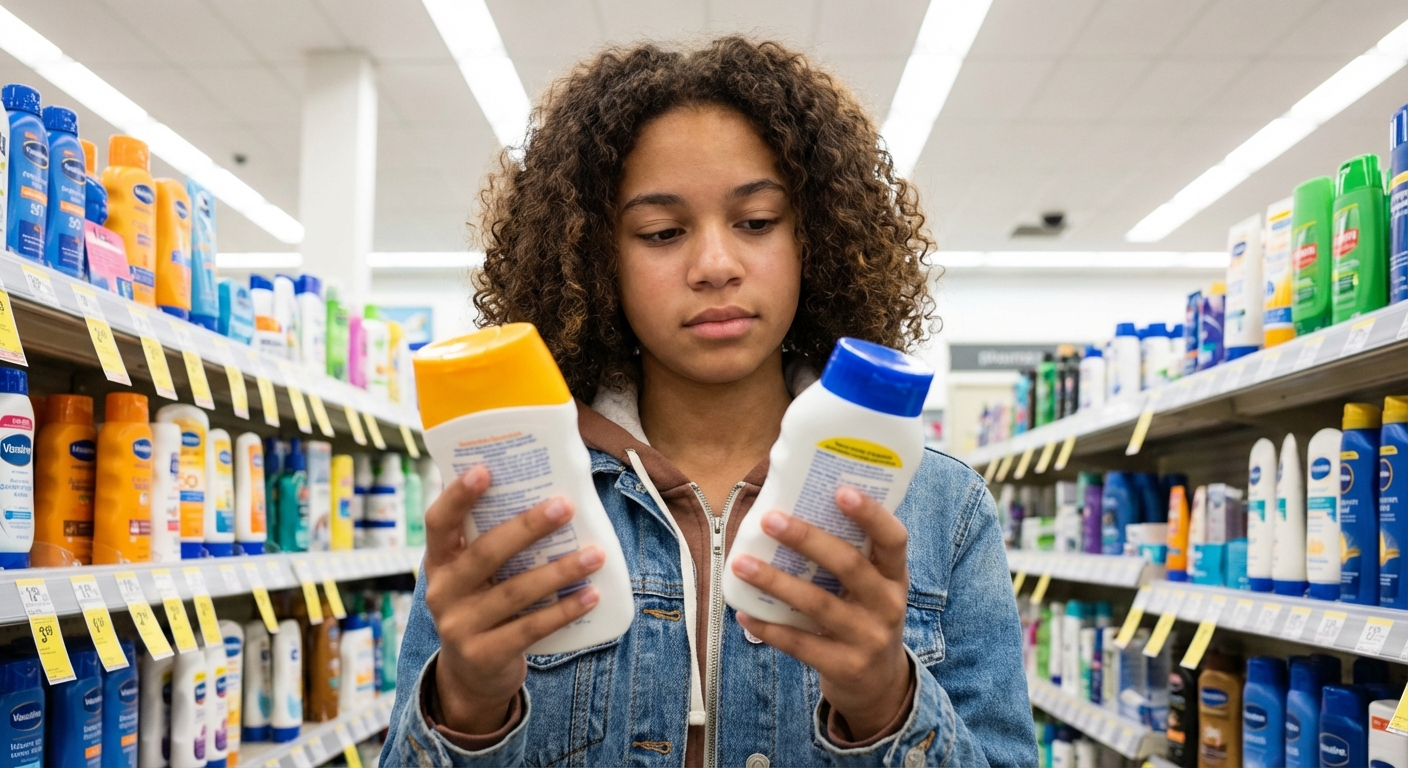
EltaMD UV Clear Broad-Spectrum SPF 46
Your dermatologist is going to recommend this one. Count on it. It contains 9% zinc oxide (anti-inflammatory) plus niacinamide, which has its own acne-fighting benefits -- studies show niacinamide reduces sebum production and improves skin barrier function. Lightweight, minimal white cast on light-to-medium skin tones. Oil-free.
The honest take: It does leave a slight cast on deeper skin tones. Not dramatic, but noticeable. And at around $39 for 1.7 oz, it's not cheap for a teenager's budget. But if your parents are already spending money on derm visits, this is the sunscreen that derm probably wants you using.
Best for: Light to medium skin tones. Anyone already seeing a dermatologist.
La Roche-Posay Anthelios Melt-In Sunscreen Milk SPF 60
If you've tried sunscreens and hated all of them, try this one before you give up. It's a chemical sunscreen with incredibly high UVA protection (La Roche-Posay's European heritage means they take UVA seriously). It absorbs fast, feels like nothing on the skin, and layers beautifully under other products. Non-comedogenic and fragrance-free.
The honest take: Some people with very sensitive acne-prone skin react to chemical filters. If your skin stings when you apply this, it's not for you. But for the majority of teens? This disappears into skin like a moisturizer. No white cast whatsoever.
Best for: Teens who hate the feel of sunscreen. Any skin tone.
Supergoop Unseen Sunscreen SPF 40
Why does this cost $38 for 1.7 oz? Because Supergoop knows you'll pay it. And honestly? You probably should. Clear, weightless, feels like a silicone primer. No white cast on any skin tone. This is a fully chemical sunscreen, so you won't get the anti-inflammatory benefits of zinc, but the compliance factor is through the roof. Teens love this because it doesn't look or feel like sunscreen.
The honest take: The silicone-heavy formula can cause breakouts in some people. If you notice new small bumps after starting this, the silicones are the culprit. But for teens who flat-out refuse to wear anything else? A win is a win.
Best for: Teens who won't wear anything else. Works on all skin tones.
Black Girl Sunscreen Kids SPF 50
Zero white cast. Truly zero -- not "minimal," not "barely noticeable." Zero. Despite the "Kids" label, the formulation works great for teens and adults. The brand explicitly designed this for darker skin tones, and it shows.
Best for: Medium to dark skin tones. Teens who've given up on sunscreen because everything looks ashy.
Neutrogena Clear Face Break-Out Free Liquid Lotion SPF 50
Around $12 at any pharmacy. That's the headline. Oil-free, non-comedogenic, specifically formulated for acne-prone skin. Matte finish. Chemical sunscreen.
The honest take: Is it as elegant as Supergoop or EltaMD? No. It can pill if you apply too much or layer it over certain moisturizers. The finish is decent but not invisible. But at a third of the price of the "prestige" options, it's hard to argue with. For teens buying their own sunscreen with babysitting money, this is the practical choice. Sometimes practical wins.
Best for: Budget-conscious teens. Oily skin types.
CeraVe AM Facial Moisturizing Lotion SPF 30
What if you just want fewer steps? This is moisturizer and SPF 30 in one. Contains ceramides and hyaluronic acid to support the skin barrier -- which acne treatments tend to wreck -- plus niacinamide. Hybrid formula with some zinc oxide and chemical filters.
The honest take: SPF 30 is the minimum recommended, and with a moisturizer-sunscreen combo, most people don't apply enough to actually get that full SPF 30 protection. If you're on tretinoin or spending serious time outdoors, this probably isn't enough on its own. But for everyday school-to-home protection? It simplifies the routine. And simpler routines actually get followed.
Best for: Teens who want fewer steps. Dry or combination skin on acne treatments that are causing flaking.
How to Actually Wear Sunscreen Over Acne Products
I know nobody actually does this perfectly. But here's why you should try -- and how to make it as painless as possible.
The order matters. Get it wrong and your sunscreen pills, your acne treatment doesn't penetrate, or you end up with a greasy mess that makes you want to skip the whole routine tomorrow.

Morning routine for acne-prone skin:
- Gentle cleanser
- Acne treatment (if it's a morning product -- many retinoids are PM only)
- Moisturizer (light, oil-free)
- Sunscreen (full quarter-teaspoon for your face -- more than you think)
Wait about 60 seconds between each step. Not five minutes, despite what some skincare influencers claim. Just enough for each layer to set slightly.
Two mistakes teens constantly make:
First, not using enough. A pea-sized dot does nothing. You need about 1/4 teaspoon -- roughly a two-finger length -- to cover your face. Most people apply half that amount, which means your SPF 50 is performing more like an SPF 25. That's a big deal.
Second, not reapplying. Look, I get it -- nobody wants to reapply sunscreen over makeup in the middle of a school day. But if you're outside for PE, lunch, or after-school sports, you need to reapply every two hours of sun exposure. Yes, over makeup. Yes, it's annoying. A setting spray with SPF or a powder sunscreen can help here -- they're not perfect, but they're way better than nothing.
What About SPF in Makeup and Moisturizers?
Barely counts. The SPF in your tinted moisturizer or foundation is tested at 2 mg/cm2 -- the same thickness required for standalone sunscreens. Nobody applies foundation that thick. You'd look like you're wearing a mask.
Use these products as a bonus layer, not your primary protection. Your dedicated sunscreen goes on first. Anything with SPF that goes on top is just extra credit.
Bottom Line
If you're treating acne, sunscreen isn't a nice-to-have. It's the thing standing between you and dark marks that outlast the pimples by months. Pick something oil-free and non-comedogenic, match it to your skin tone so you'll actually wear it, and apply more than you think you need. The "best" sunscreen is whichever one ends up on your face every morning instead of sitting on the shelf.
How we reviewed this article:
Our experts continually monitor the health and wellness space, and we update our articles when new information becomes available.
- Photoprotection in Skin of Colorhttps://pubmed.ncbi.nlm.nih.gov/34243983/
- Sunscreen and Acne: A Reviewhttps://pubmed.ncbi.nlm.nih.gov/31745437/
- Post-Inflammatory Hyperpigmentation: A Review of the Epidemiology, Clinical Features, and Treatment Optionshttps://pubmed.ncbi.nlm.nih.gov/19438673/
- Retinoid-Induced Photosensitivity: A Reviewhttps://pubmed.ncbi.nlm.nih.gov/30811595/
- AAD: Sunscreen FAQshttps://www.aad.org/public/everyday-care/sun-protection/sunscreen-patients/sunscreen-faqs
- Comedogenicity of Current Therapeutic Products, Cosmetics, and Ingredients in the Rabbit Earhttps://pubmed.ncbi.nlm.nih.gov/6229554/
- Benzoyl Peroxide and Photosensitivityhttps://pubmed.ncbi.nlm.nih.gov/28410024/
- Efficacy and Safety of Niacinamide in Acne Vulgarishttps://pubmed.ncbi.nlm.nih.gov/28220628/
Read This Next

At-Home Dermatology Tools: Gua Sha, Jade Rollers, and Acne Devices
Most at-home skin tools are luxury items, not acne treatments. Here's an honest look at what works, what's harmless, and what can actually make things worse.
Read More →
Vitamin C Serum and Acne: Brightening Without Breaking Out

Ceramides and Acne: Why Your Skin Barrier Is the Foundation

Probiotics for Acne: What the Science Actually Says (So Far)
The gut-skin axis is real and the early research on probiotics for acne is interesting. But 'interesting' and 'worth spending $30/month on' aren't the same thing. Here's what we know and what we don't.
Read More →
Hormonal IUDs and Acne: Why Some Birth Control Makes Skin Worse
Levonorgestrel IUDs like Mirena and Kyleena can trigger or worsen acne because of their androgenic progestin. Here's why it happens, what to do about it, and how other birth control options compare.
Read More →