Acne Patches and Spot Treatments Ranked: Which Ones Actually Work
Medically reviewed by Dr. Rachel Torres, MD, Pediatric Dermatologist
Written by Teen Acne Solutions Editorial Team — Updated April 16, 2026
Key takeaways
- Hydrocolloid patches work best on whiteheads that have already come to a surface — they pull out fluid and protect the area from bacteria and your fingers
- Medicated patches add active ingredients like salicylic acid or microdarts, but cost 3-5x more per patch
- Benzoyl peroxide remains the gold standard for spot-treating inflammatory acne, backed by decades of clinical research
- Patches physically prevent picking which makes them especially useful for teens who can't stop touching their face
- Price doesn't equal performance — a $5 pack of COSRX patches can outperform a $19 box of designer dots
You're staring at a whitehead at 7:15 AM and school starts in 45 minutes. You know you shouldn't pop it. You're going to pop it anyway. And then it's going to look ten times worse by second period.
That's the exact scenario acne patches were designed for. But with a dozen brands charging anywhere from $0.15 to $1.50 per patch, it's worth knowing which ones actually do something — and which are basically an overpriced sticker.
We ranked the most popular patches and spot treatments on the market. Some impressed us. Some didn't.
How Hydrocolloid Patches Actually Work
Hydrocolloid isn't some fancy new skincare ingredient. It's wound care technology that's been used in hospitals since the 1980s. Nurses apply hydrocolloid dressings to burns and surgical wounds because they do three things really well:
They absorb fluid. The material contains gel-forming agents — usually carboxymethylcellulose — that pull moisture out of a wound. On a pimple, that means drawing out pus and oil from a whitehead that's ready to drain.
They create a moist healing environment. This sounds counterintuitive. Shouldn't you dry a pimple out? Actually, no. Research consistently shows that wounds heal faster when kept slightly moist rather than exposed to air. The hydrocolloid layer maintains that balance — wet enough to heal, sealed enough to prevent bacterial contamination.
They form a physical barrier. Between your dirty fingers and the pimple. Between your pillowcase and the pimple. Between your phone screen and the pimple. This is honestly the most underrated benefit.
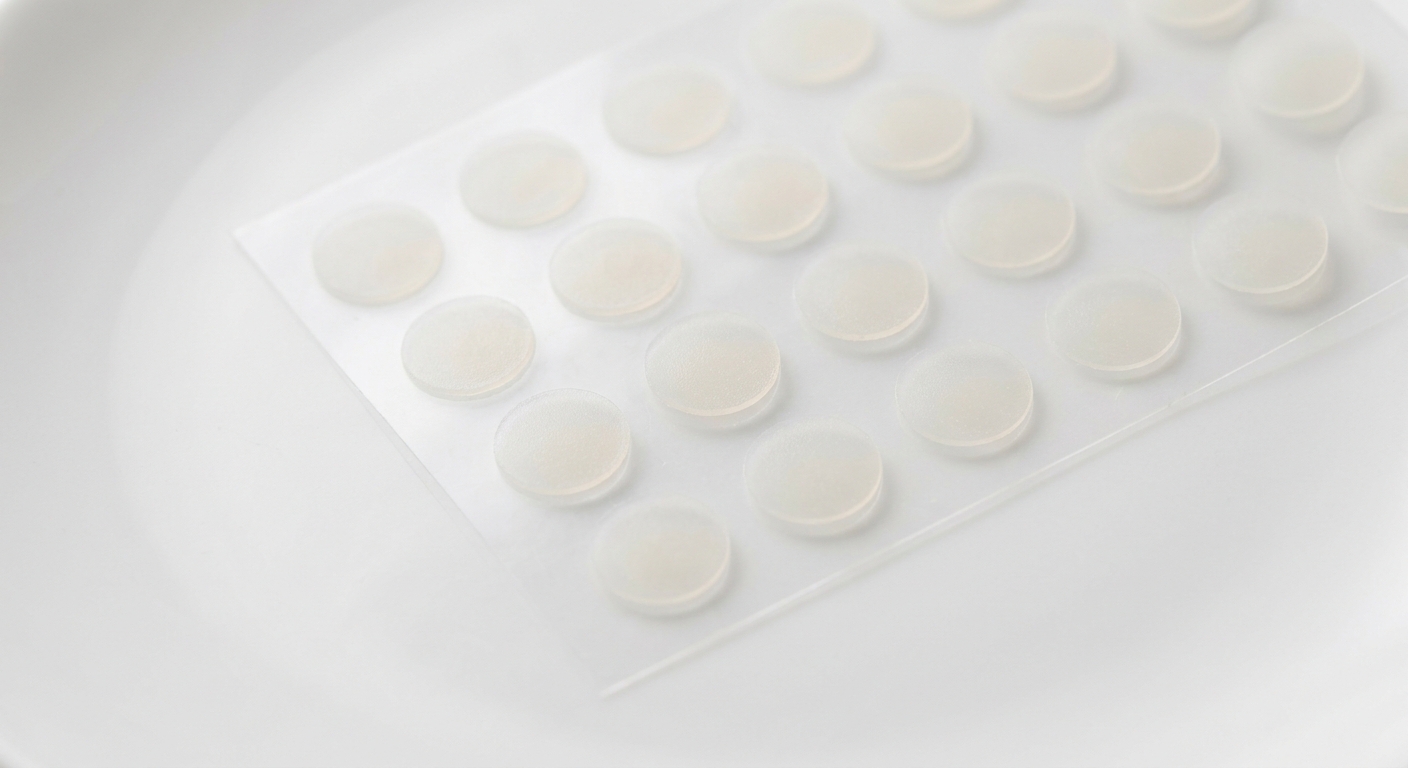
Here's the thing most people don't realize: plain hydrocolloid patches only work well on pimples that have come to a head. That whitehead with a visible tip? Perfect candidate. That deep, painful cystic bump under your jaw? The patch will just sit there looking sad. It can't reach what it can't access.
That's where medicated patches come in — some use salicylic acid infused into the patch material, others use dissolving microneedles (microdarts) that physically penetrate the skin to deliver ingredients deeper. The science on microdarts is still emerging, but early studies show they can improve delivery of active ingredients into the dermis.
Acne Patches Ranked
Not all patches are created equal. Here's how the major players stack up.
1. COSRX Acne Pimple Master Patch — Best Overall Value
24 patches for about $5. That's roughly $0.20 per patch.
They're thin, they stick well, they do the job. Nothing fancy — just solid hydrocolloid that absorbs gunk overnight and peels off satisfyingly gross in the morning. The pack comes with three sizes, which is actually useful because not every pimple is the same diameter (weird how other brands forget this).
If you want proof that expensive doesn't mean better, stick a COSRX on one cheek and a premium patch on the other. We'll wait.
2. Hero Cosmetics Mighty Patch Original
This is the one that started the acne patch craze in the US. And credit where it's due — they made patches cool. Before Mighty Patch, most American teens had never heard of hydrocolloid dots.
The patch itself is slightly thicker than COSRX, which means it absorbs a bit more but is also more visible during the day. At around $0.50 per patch, you're paying a brand premium. Worth it? If you're buying your first pack ever, sure. The packaging is friendly, the instructions are clear, and they work. But once you know what you're doing, COSRX gives you more for less.
Hero also makes the Mighty Patch Invisible+ — thinner, more discreet, slightly less absorbent. Good for daytime if you don't want to walk around with an obvious dot on your face.
3. Starface Hydro-Stars
Let's be honest about what Starface is selling: vibes.
The yellow star-shaped patches are cute. They come in a little compact case. They've built an entire brand identity around making acne feel less shameful, and that's genuinely cool. For a 14-year-old who's embarrassed about breakouts, a bright yellow star that says "yeah, I have a pimple and I'm dealing with it" can be powerful.
But the patches themselves? They're average hydrocolloid. And they cost about $0.70 each. You're paying for the shape, the case, and the Instagram aesthetic. If that matters to you, go for it. If you just want results, look elsewhere.
4. Peace Out Acne Dots
These patches contain salicylic acid (0.5%) and aloe vera infused into the hydrocolloid material. That puts them in the "medicated patch" category, and at about $1.00 per patch, they charge accordingly.
Do the added ingredients help? Modestly. Salicylic acid is a proven acne-fighter — it's a beta-hydroxy acid that dissolves the gunk inside clogged pores. But the concentration in these patches is low, and the contact time (even overnight) may not be enough to make a dramatic difference versus plain hydrocolloid. They're fine. They're just not $1-per-patch fine.
5. ZitSticka Killa Kit
The expensive one. Around $1.50 per patch — sometimes more.
ZitSticka uses dissolving microdarts (tiny needles you can barely see) that press into the skin and deliver salicylic acid, niacinamide, and hyaluronic acid below the surface. This is the only patch on this list designed for early-stage pimples — those deep, forming bumps that haven't surfaced yet.
Does the microdart technology work? There's some evidence that microneedle delivery systems improve ingredient penetration into skin. But the research is on microneedle technology broadly, not specifically on ZitSticka's formulation for acne. Some users swear by them for cystic spots. Others notice zero difference.
Our take: try a single pack if you get painful under-the-skin pimples that don't respond to anything else. But don't expect miracles at that price point.
Spot Treatments That Hold Up
Patches get the social media hype. But traditional spot treatments backed by clinical research still work — sometimes better.
Benzoyl Peroxide (2.5%-5%) — The One That Actually Has Decades of Evidence
If you could only pick one spot treatment for the rest of your teen years, make it benzoyl peroxide.
It kills C. acnes bacteria on contact. It reduces inflammation. And unlike antibiotics, bacteria don't develop resistance to it easily because it works through oxidation rather than a biological mechanism bacteria can adapt to. A 2021 review in the journal Dermatology and Therapy confirmed it remains one of the most effective topical acne treatments available.
Here's a tip most people learn too late: 2.5% benzoyl peroxide works almost as well as 10% but causes significantly less dryness, peeling, and irritation. Higher concentration doesn't mean better results — it just means more side effects. Start low. A pea-sized amount on the spot, once or twice daily.
Good options: Neutrogena On-the-Spot (2.5%), La Roche-Posay Effaclar Duo (5.5% micronized), or honestly any drugstore brand with 2.5% BP. They all contain the same active ingredient.
Warning: Benzoyl peroxide bleaches fabric. Your pillowcase, your towels, that black t-shirt — all at risk. Use white towels and old pillowcases. We're not kidding. You'll learn this lesson one way or another.
Salicylic Acid Spot Treatment (1%-2%)
Salicylic acid works differently from benzoyl peroxide. It's oil-soluble, so it can penetrate into clogged pores and dissolve the dead skin cells and sebum trapped inside. It's better for blackheads and small clogged bumps than for big inflamed pimples.
As a spot treatment, it's gentler than BP but also slower-acting. Think of it as the patient option. A good pick if benzoyl peroxide irritates your skin — some people just can't tolerate it, and that's okay.
The Clean & Clear Advantage Spot Treatment and Paula's Choice BHA 9 are both solid choices.
Sulfur Treatments — The Weird One That Works
Sulfur smells like eggs. Let's just get that out of the way.
But it's been used for acne since before your grandparents were born, and it works. It reduces oiliness, has mild antibacterial properties, and helps peel away dead skin. A study in the Journal of Drugs in Dermatology confirmed its efficacy, particularly for inflammatory lesions.
The De La Cruz Sulfur Ointment (10%) costs about $6 for a huge tub. Apply a thin layer to spots before bed, wash it off in the morning. It's not glamorous. It won't win any packaging awards. Your room might smell slightly sulfuric. But it works, especially on those angry red pimples that seem immune to everything else.
Mario Badescu Drying Lotion is the more popular (and more expensive) sulfur option — the pink stuff you dab on with a Q-tip. It combines sulfur with calamine and salicylic acid. It's fine, but you're paying $17 for what is essentially fancy calamine lotion.

Patches vs. Spot Treatments: When to Use What
Quick decision guide:
Use a patch when:
- The pimple has a visible whitehead
- You know you'll pick at it otherwise
- You want overnight absorption
- You're heading out and want to cover it while treating it
Use a spot treatment when:
- The pimple is deep and hasn't surfaced
- You're dealing with multiple small spots across an area
- You want stronger active ingredients working on the problem
- The breakout is more inflammatory than surface-level
You can also combine them. Apply benzoyl peroxide during the day, then slap a hydrocolloid patch on overnight. The patch protects the treated skin while you sleep and prevents you from rubbing the spot treatment all over your pillow.
The Picking Problem
This is the part nobody wants to talk about — but it might be the most important section in this entire article.
A study published in Comprehensive Psychiatry found that skin picking is remarkably common among adolescents. Some estimates put it at 28-45% of college students engaging in repetitive skin picking. For teens with acne, the urge is even stronger because there's always a target.
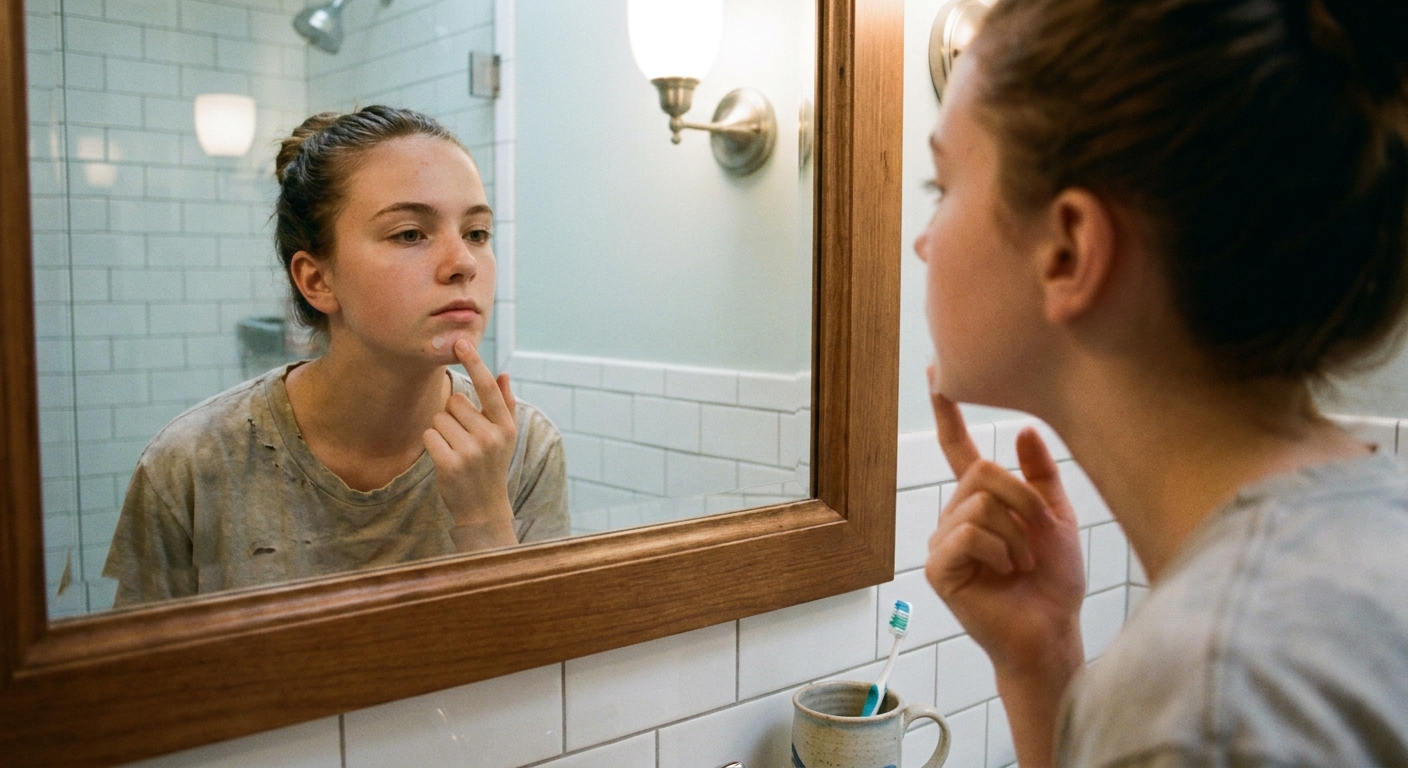
Every dermatologist will tell you: picking makes acne worse. It pushes bacteria deeper, causes scarring, and turns a 3-day pimple into a 2-week wound. You already know this. Knowing doesn't help when you're standing in front of the bathroom mirror.
That's why patches might be the most important product on this list — not because the hydrocolloid is magic, but because a physical barrier between your fingers and your face actually works. You can't pick what you can't touch. One teen I know described it as "putting a tiny force field on my pimple." She went from constant post-inflammatory hyperpigmentation to barely any scarring within a few months, and the only thing she changed was wearing patches.
If picking is something you struggle with, patches aren't just a treatment. They're a behavior tool.
Bottom Line
Save your money on fancy patches and spend it on proven active ingredients instead. A $5 pack of COSRX hydrocolloid patches plus a $7 tube of 2.5% benzoyl peroxide will outperform $50 worth of trendy, Instagram-famous alternatives. The best acne treatment is the boring one you actually use every day — not the pretty one collecting dust on your bathroom shelf.
How we reviewed this article:
Our experts continually monitor the health and wellness space, and we update our articles when new information becomes available.
- Efficacy of Hydrocolloid Dressings in the Treatment of Acne Vulgarishttps://pubmed.ncbi.nlm.nih.gov/36477676/
- A Review of the Use of Benzoyl Peroxide for the Treatment of Acne Vulgarishttps://pubmed.ncbi.nlm.nih.gov/34554429/
- Salicylic Acid as a Peeling Agent: A Comprehensive Reviewhttps://pubmed.ncbi.nlm.nih.gov/26029015/
- Skin Picking Disorder: Prevalence, Correlates, and Treatmenthttps://pubmed.ncbi.nlm.nih.gov/33751677/
- Acne Vulgaris Management: What Does the Most Recent Evidence Say?https://pubmed.ncbi.nlm.nih.gov/36920816/
- AAD Guidelines of Care for the Management of Acne Vulgarishttps://www.jaad.org/article/S0190-9622(16)00017-2/fulltext
- Topical Sulfur in the Treatment of Acne and Rosaceahttps://pubmed.ncbi.nlm.nih.gov/15068797/
- Moist Wound Healing with Occlusive Dressings: A Clinical Reviewhttps://pubmed.ncbi.nlm.nih.gov/10556382/
Read This Next

At-Home Dermatology Tools: Gua Sha, Jade Rollers, and Acne Devices
Most at-home skin tools are luxury items, not acne treatments. Here's an honest look at what works, what's harmless, and what can actually make things worse.
Read More →
Vitamin C Serum and Acne: Brightening Without Breaking Out

Ceramides and Acne: Why Your Skin Barrier Is the Foundation

Probiotics for Acne: What the Science Actually Says (So Far)
The gut-skin axis is real and the early research on probiotics for acne is interesting. But 'interesting' and 'worth spending $30/month on' aren't the same thing. Here's what we know and what we don't.
Read More →
Hormonal IUDs and Acne: Why Some Birth Control Makes Skin Worse
Levonorgestrel IUDs like Mirena and Kyleena can trigger or worsen acne because of their androgenic progestin. Here's why it happens, what to do about it, and how other birth control options compare.
Read More →